Odyssey Speaks
Hardly a day goes by without news of Australia’s drug problem: teenage binge drinking, the ‘ice epidemic’, a resurgence in heroin supply, party drugs at festivals, the link between mental illness and drugs...
Odyssey Speaks features regular opinion pieces, articles and presentations on alcohol and other drugs by Odyssey House experts, drawing on more than 30 years of firsthand experience helping 30,000+ Australians overcome drug dependence.
Unlike the song says: Go, go, go! to rehab
On 23 July 2011, singer Amy Winehouse died at her London home at the age of 27, her young life and promising career apparently cut short by misuse of alcohol and other drugs. She had been a star performer with a bright future, winning several Grammy Awards in 2007 for her album “Back to Black”. Since that success, Winehouse unfortunately became known more for her off-stage problems associated with dependence on alcohol and illicit drugs, and over the next four years the public witnessed the graphic demise of a truly talented young woman.
In the aftermath, it’s important to ask ourselves: what are we are able to learn when a high profile personality of Winehouse’s calibre goes astray and her behaviour seemingly leads to an untimely death?
Drugs and drug use, both licit and illicit, are common in our society. For those people who become dependent on drugs, there are very real negative consequences to their health and welfare and to those around them. The old adage that ”Drug abuse touches every strata of society!” is true. However, the people who are most at risk to the adverse consequences of drug abuse are those at the lower end of the socio economic scale.
One of Winehouse’s most successful songs was titled “Rehab”, with the catchy line being her assertion: “They told me to go to rehab and I said no, no, no!” Someone close to her had recognised that Winehouse was suffering due to her use of alcohol and illicit drugs and had encouraged, suggested and exhorted her to go to rehabilitation for help.
There are many people suffering from the same ill effects as Winehouse, and unfortunately many resist the urgings of concerned family and friends when self-help or out-patient counselling doesn’t seem to overcome the problem. While the prospect of taking months out of your life for rehab may be daunting, for some people - particularly those with long-standing drug dependence - residential rehabilitation may well be the answer.
Rehabilitation at an organisation like Odyssey House gives an individual the opportunity to live in an environment free of the negative influences that supported and/or perpetuated their use and dependence upon drugs. They can learn new coping strategies and skills to deal with the underlying emotional conflicts that were the driving forces behind their continued use of drugs despite the obvious negative consequences. This is done with the support of trained professionals in the field of addiction, some of whom have had their own recovery experience. Staff are supported by external consultants in the disciplines of psychiatry, psychology and medicine. Of equal importance is the fact that people undergoing rehabilitation take an active role in the day-to-day management of the program, taking responsibility for themselves and providing support for one another.
I would encourage people to remember Amy Winehouse as a tremendously gifted performer who died much too early. Unlike Amy Winehouse, I would encourage you to take notice if someone who cares about you has encouraged you to seek help, and go to rehab sooner rather than later. As a counter to Winehouse’s exhortation to say “No, no, no!”, I would encourage you to “Go, go, go!”.
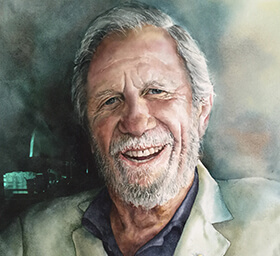
James A. Pitts
Chief Executive Officer
Odyssey House